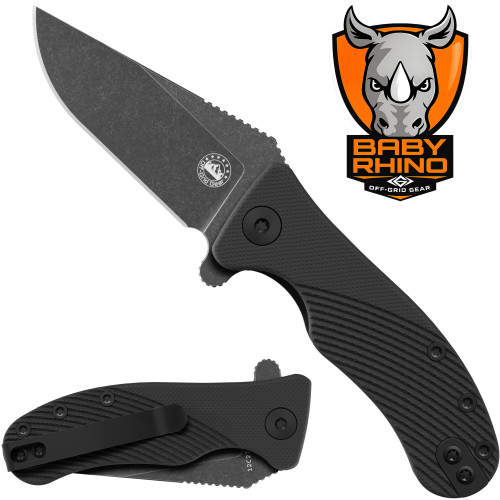
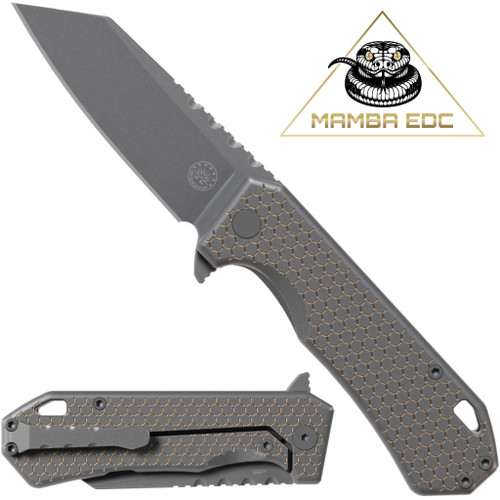
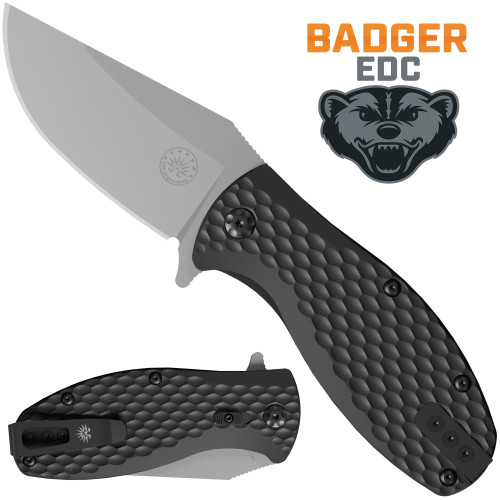
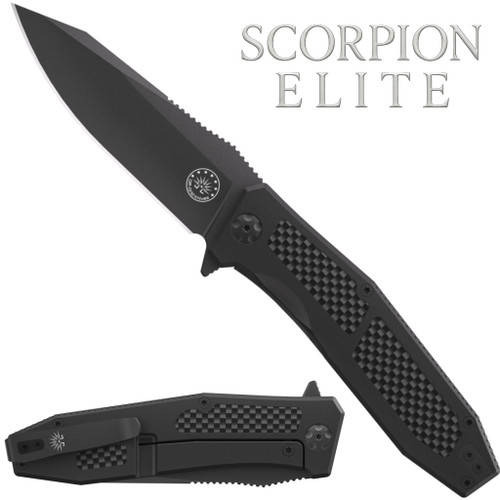
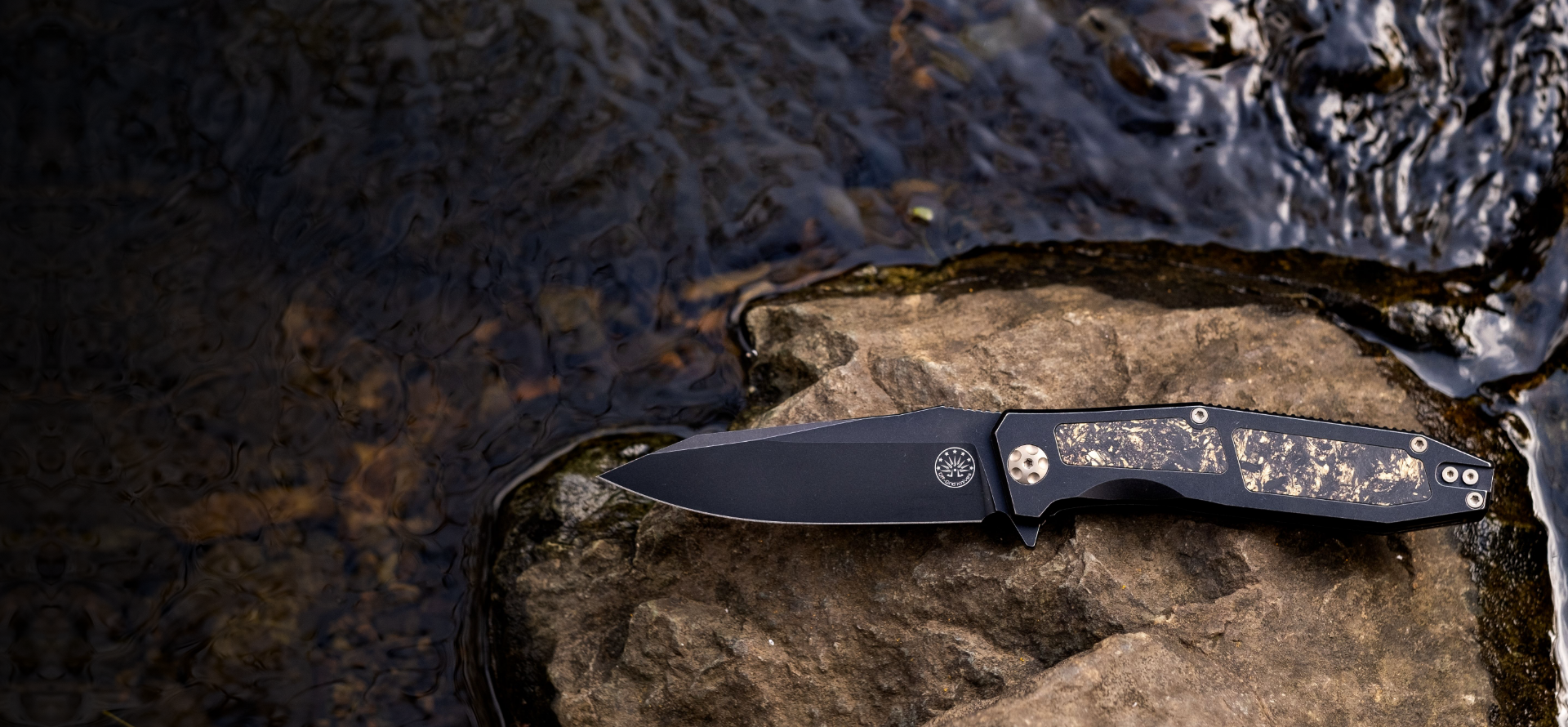
The clip point trims the spine down to a fine, sharp tip that goes exactly where you aim it. Pair that with a long slicing edge and you get a blade built for precise work that still handles the everyday grind.
A clip point blade looks like part of the spine was clipped off near the tip, either in a straight line or a slight curve. That cut brings the point down and makes it thinner and sharper, so you get better control for detail work, cleaner piercing, and an easy tip for jobs like opening packages or trimming. Behind the tip, a long curved edge handles your everyday slicing.
It is one of the most popular shapes for everyday carry, hunting, and camping, and it is the shape behind favorites like the BADGER. Our clip point knives are built with proven steels including Cryo D2, Sandvik 14C28N, CPM MagnaCut, and Vanax, with G10 or titanium handles that grip solid in any conditions.
Every Off-Grid knife is backed by our lifetime warranty, and standard shipping is free on orders over $99.
A clip point knife has a section of the spine near the tip cut away, straight or concave, which lowers the point and makes it thinner and sharper. The name comes from that "clipped" look. It is one of the most common blade shapes on pocket knives and hunting knives.
Precise work. Opening packages, trimming, detail cuts, skinning, food prep, and general everyday tasks. The sharp tip gets into tight spots, and the long edge handles regular slicing, so it covers a lot of ground in one knife.
A clip point has a thinner, sharper tip for precision and piercing. A drop point has a thicker, stronger tip that holds up better to prying and hard use. If you want finesse, go clip point. If you want toughness at the tip, go drop point or tanto.
Yes, it is one of the most popular EDC shapes out there. The fine tip makes quick work of tape, packaging, and small detail jobs, and the edge handles everything else your day throws at it.
Yes. The sharp, controllable tip is great for making the first cut, working around joints, and detailed skinning. Some hunters prefer a drop point for field dressing since the tip is less likely to puncture, so many carry one of each.
It is a solid pick for camp chores, food prep, carving, and cutting cordage. The fine tip is handy for detail work like drilling notches. For heavy chopping or batoning, a larger fixed blade is the better tool.
For everyday carry and most hunting, a 3 to 4 inch blade gives you control and carries easily. Larger blades give you more reach and leverage for outdoor work. Check each product page for exact blade length and weight.
Use a whetstone, rod, or guided sharpener and hold a steady angle, around 20 degrees per side. Start coarse if the edge is dull, finish on a fine grit, then strop. Go light near the tip so you keep it fine and sharp. More tips on our Knife Care & Safety page.
We’re currently away from July 8–15. All orders placed during this time will ship on July 16, 2025. If you need your order sooner, please visit our Amazon store for faster delivery.
 SITEWIDE FREE SHIPPING
 BACKED BY OURLIFETIME WARRANTY
 WE SUPPORT OURVETERANS & COPS